All You Need is Luck
Author Inspiration
& Goals
I wrote All You Need Is Luck to preserve a story that might otherwise be lost with time. My journey began in Communist Hungary and led through hardship and uncertainty, ultimately culminating in the opportunity to build a new life in America. Along the way, I learned that perseverance, courage, and faith often matter just as much as luck. By sharing my experiences, I hope to honor those who came before me and provide a glimpse into an important period of history that should not be forgotten.
Author Bio
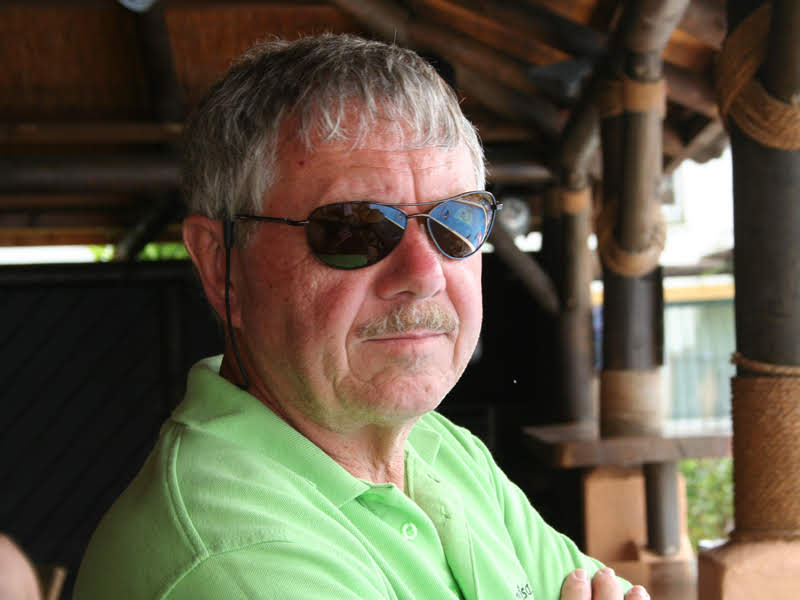
Peter Vadasz's story began in Hungary, where he grew up under communist rule before making the life-changing decision to seek freedom and opportunity in the United States during the 1960s. Arriving in America with determination, hope, $60.00, and little else, he embarked on a journey that would shape his understanding of perseverance, gratitude, and the unexpected role that luck can play in our lives.
Throughout his years in America, Peter experienced both challenges and opportunities that tested his resilience and character. He earned a university scholarship, built a successful career, raised a family, and pursued the American dream with the same determination that carried him across an ocean. Along the way, he witnessed firsthand how small decisions, chance encounters, and unexpected opportunities can alter the course of a life.
His experiences during the Vietnam War era, his professional accomplishments, and the relationships he built throughout his life reinforced a lesson he would come to appreciate deeply: while hard work and determination are essential, many of life's greatest opportunities arrive unexpectedly. Recognizing and embracing those opportunities often makes all the difference.
Peter wrote All You Need Is Luck to share the lessons he learned through decades of personal experience. The book explores the idea that luck is often misunderstood. Rather than something that simply happens to us, luck often presents an opportunity that requires courage, commitment, and effort to pursue. Through personal stories and reflections, Peter encourages readers to recognize the opportunities in their own lives and approach them with optimism and purpose.
More Books by This Author
Peter Vadasz escaped communist Hungary in the 1960s with a dream of finding freedom and opportunity in America. His journey was shaped by perseverance, hard work, and a remarkable series of fortunate moments that inspired his book, All You Need Is Luck. From earning a university scholarship to building a successful life and career, Peter's experiences reflect the power of resilience, optimism, and embracing opportunity when it appears. Through his writing, he hopes to encourage others to recognize the life-changing opportunities that often arrive disguised as challenges.
Author Representation
Open to Agent Contact
Author Contact
Book Summary
All You Need is Luck is a guide for everyone who recognizes the serendipitous challenges of good fortune in life. Through a series of amazing experiences by this Hungarian political refugee, we can see the role of luck in life and understand how it works. The stories are sometimes humorous and sometimes terrifying. Each adventure unveils Lady Luck's presence and the environment in which she thrives.
Meet a Character
Granny Major
I liked the Majors. They always gave me chocolate. My parents could never afford to buy me treats. Mrs. Major and her mother, Granny Major, used to send me down to the store to buy them a loaf of bread or whatever else they needed for the kitchen. They always rewarded me with the change or a piece of fine pastry. Yep, I was always available to run errands for the Majors. Except for when they wanted ice. That I hated. The icehouse was too far; I had to walk fast before it would all melt. It was a lot of work. But Mrs. Major was so nice, I usually did it anyway.
Granny Major was different. She was the old matron, the figure of authority. The old matriarch was an imposing figure at over three hundred pounds. The cheeks of her buttocks were trembling like a bowl of Jell-O at each step she took on the cement corridor. Her short gray hair was combed straight back, and her penetrating steel blue eyes gave her a stern appearance. I don’t think I ever saw her smile. My sister and I knew not to mess with her.
She liked us, although she made it clear we were not her friends. We were her subjects. She had the aura of the benevolent patrician around her. Always ready to bump you back down into your social stratosphere. She was a snob. According to the gossip, Granny Major’s father was a Russian aristocrat who escaped the wrath of the Bolsheviks just by the skin of his teeth. Supposedly, he had even counseled the czar before the revolution.
Reader Preview
I didn’t quite know what the revolution was all about but understood the fundamentals. The communists were the enemy; the revolutionaries were the patriots. And we had to fight the Russians. The rest of the details were somewhat hazy.
The freedom fighters had no chance from the very beginning. They just wanted to hang on until the American troops arrived. They couldn’t even imagine that the West would let them down after all the propaganda broadcast from Radio Free Europe and the Voice of America.
By the middle of November of that year, barely thirty days after it started, it was obvious that the uprising had failed. A few small bands of armed men refused to give up, but the hated Soviet Army had the country under complete control. The dreams were short-lived.
As the fighting stopped in the central section of Budapest, I wore my parents’ resistance down and got their permission to visit my friends. I had been locked up for a month and was itching to get out of the house. I had heard the gunshots and the stories of the fight outside; there were rumors about the burnt-out tanks with the Russian soldiers still inside. There were still a few snipers around on the outskirts, so I had to promise not to go outside our general area. I was ready to promise anything; just let me go!
I bolted out of there before my parents could change their minds. I wanted to see a dead Russian soldier. I must remind you, we did not have television in Hungary back in those days. So, my friend and I were ready for a safari. In about twenty minutes we were well outside our immediate district. The bombed-out buildings were surreal; the empty storefronts looked creepy. The city was almost deserted, just a few people darting across the streets nervously with their heads down, glancing occasionally to the side and the windows above them. The eerie silence was scary. The noisy cafes were closed, shops locked up, and even the ever-present streetcars were absent. As we walked down a narrow alley, the cobblestones were all piled up on the sidewalk in a makeshift barricade. Empty shells littered the doorway of a burned-out building. Somebody gave his life there in the hopeless fight against tyranny.
“Those dirty communists!” My friend whispered in defiance. We clenched our fists and walked on. Two kids, only eleven, entering adulthood one corner at a time. It was time to head back. This little excursion took a lot longer than what my parents had in mind; I was sure of that. We straightened up, held our heads high, and began to find our way back home. In a few minutes we were back on home ground. As we were passing through Elisabeth Park, a stranger approached us. He was a middle-aged man in a long dark coat that seemed one size too large for his figure. We stopped as the man stepped right in front of us.
“How would you two like to do something for your country?” asked the stranger in a deep, hushed voice. We looked at the man nervously, not knowing what to expect. How do we know which side he is on? Is this a trap?
“What do you have in mind?” I asked carefully.
The man reached inside his overcoat and produced a stack of fliers. "Give these to the Russian soldier standing guard over there at the corner.” The stranger said as he handed us his leaflets. I took possession of the stack of fliers. We quickly divided them and were off on our mission. We had joined the revolution. We felt invincible.
Shoulder to shoulder with crisp marching steps, we walked straight up to the young Russian soldier standing at attention at the corner of the State Security Building. I was going to do the talking.
“Here we have this for you,” I said to him in Hungarian, holding up the stack of leaflets. I motioned to my friend to do the same. The soldier had his finger on the trigger of his AK47 but was smiling. He did not understand what I was trying to do.I held up both stacks in one hand and pointed at them.
“This is for you,” I repeated and stuck my arms out, offering him the fliers. He finally understood and took the papers with his free hand. We waved to him, turned around, and walked away. I lived two doors down from the corner. As I glanced back over my shoulder, I saw the Russian soldier watching me with a puzzled look on his face as I disappeared through the thick wooden gates of our apartment building.
It was late afternoon; most of the tenants were indoors, hiding from the grim realities of the failed attempt to overthrow the communist regime. Suddenly there was a knock. My father got up to answer the door. It was Mrs. Varga. She looked scared, her eyes darting right and left, softly whispering something in my father’s ear. Whatever she said must have impressed him. His face grew long and thin, his eyes wide open, as he turned around, looking straight at me.
“Did you give some papers to the Russian soldiers down the street?” He asked. My heart stopped. Oh, my God! I was clearly stalling for time, not knowing what to say. This was too serious to lie about, but how am I going to explain them?
“Peter, did you give any papers to the soldiers around the corner on your way home?” There was no point in dragging this out any further. I had to face the consequences. “Yes, I did,” I replied meekly. Somehow I wasn’t quite that anxious to do something for my country anymore. My father was always very stern with me. He used to clobber me if I brought home anything less than an “A” from school. This time was different. I could tell from his expression. He was genuinely worried. Mrs. Varga was leaning against the door, pale and speechless. This was not like her; she was never at a loss for words. My grandmother instinctively edged closer to me, spreading her arms out like a mother hen protecting her chicks from danger.
“The Russian officer wants the boy that passed out the leaflets.” Said Mrs. Varga, her voice trembling from fear and anxiety. He said that if we don’t hand over the boy, they will pull up a tank and level the building. Her hands were shaking as she slumped into a chair my father pulled out for her. My mother was becoming hysterical, as Mrs. Varga said: “If we don’t do something real soon, they will start shooting. And they know Peter lives here.”
“You don’t know these animals.” Pleaded Mrs. Varga. “They are serious! Ready to blow up the whole building!” Went on Mrs. Varga. She was truly scared. My father took a couple of steps out the door toward the railing of the narrow corridor. He looked down upon the quiet courtyard. He could clearly see an officer, accompanied by three uniformed escorts, clutching machine guns. A plainclothes man was standing behind them with his hands in the pockets of his overcoat.
“I can’t let these bastards take Peter; we will never see him again! I will go down to talk to them.” My father said. "No, you can’t.” Protested my mother. “They will take you instead.” “That’s true.” Acknowledged Mrs. Varga. “I will try to plead with them.”
She got out of the chair slowly, making her way quietly through the front door, passing down the long, narrow corridor, beginning the long descent to the ground floor. She wasn’t the self-assured apartment manager anymore, just a pitiful old lady shaking and trembling for fear of confrontation with the uniformed thugs.
As she got down to the fourth floor, somberly walking past the Major’s kitchen window, we heard a deep rumbling noise. It was getting stronger, and the whole building was resonating. The floor was vibrating, and the windows started to rattle.
“Tanks!” My father whispered as he moved out to the corridor to peek. Right then Granny Major opened up the kitchen door and rushed out after Mrs. Varga.
“What’s going on?” Demanded the old matriarch.
Mrs. Varga turned back and stood right next to her. I was watching them from behind my father’s back but could not hear a word.
Mrs. Varga obviously related the events of the last few minutes to Granny Major. She was whispering into her ear and gesticulating alarmingly. I was just staring at the two of them. Finally, Granny Major looked up straight at me. I swear she gave me a little wink. Then she untied her apron, threw it inside the apartment, and smoothed her short-cropped hair back behind her ears.
The next thing we saw was the two of them walking down the spiral stairway to the courtyard. Granny Major was leading the way with her rump rising and falling rhythmically with each step. I wasn’t going to laugh this time. We were just watching silently from above. None of us knew what was going to happen. Some of the other tenants had stepped on to the corridor to find out what was going on. They could all sense the tense situation. The past few weeks of horror had begun to take their toll on the people. Some of the women were sobbing.
The tank had stopped in front, slowly turning its turret and pointing the long gun barrel at the heavy oak doors of the apartment building. A soldier in a faded green uniform stuck his head out through a trap door on top of the T-34. The officer in the courtyard looked back over his shoulder and signaled to him. The soldier slowly slid down into the bowels of the war machine and shut the engine off.
As the rumblings of the tank ceased, the eerie silence of the old gray building just got more pronounced. We could hear Granny Major’s footsteps on the granite staircase in that long descent to the courtyard. Mrs. Varga was right behind her, just as determined. They were on a mission, supporting each other. One drew strength from the authority delegated to her by some petty bureaucrat in the Housing District, while the other felt the pressure of duty passed down to her through the bloodline of her noble ancestors.
At last, they reached the ground floor. Granny Major turned slightly, waiting for Mrs. Varga to catch up to her; then, folding their arms, they both walked up to the officer in charge. The three escorts raised their weapons, pointing the short barrels of their AK-47 at the two women. You could hear a pin drop in the hollow center of the ancient building.
Granny Major was now facing the Russian officer, looking at him with her steel blue eyes. He looked away for a moment. She extended her arms, pointing at his chest, bringing her finger close enough to touch his medals pinned onto his uniform. She said something, and he nodded his head. Then she started saying something again, stabbing the air with her finger in front of the officer’s chest. Her voice was powerful, echoing off the four walls of the building. I recognized that tone of voice, but I could not understand a word she was saying.
“What is she saying, Dad?” I quizzed my father.
“I don’t know, son, she must be speaking another language.”
By now most of the tenants were standing quietly in their doorways peeking down at the drama unfolding in the courtyard.
“Granny Major speaks fluent Russian.” Elsa from next door whispered. “Of course.” My father mumbled to himself.
The officer shook his head but could not stand the gaze of The Matriarch. She raised her voice slightly and took a step forward. Her pointed finger grazed the lapel of the Red Army uniform. The three escorts’ eyes were wide open, fingers frozen on the trigger. The officer’s eyes narrowed, but he leaned back slightly. Granny Major continued her verbal assault. She pressed on in her aristocratic demeanor. She had the strength of a fortress. It was the battle of the wills. One had a tank and an army behind him. The other had her conviction and the power of the righteous.
We could not understand the words but knew the meaning of them all too well. And it scared the hell out of us. My father could not stand it any longer.
“I have to go down there. I will talk to them.” He said.
“No,” my mother cried, “You can’t do that!”
“You have heard what they do to the men when they round them up!” She continued.
As my father tore himself from my mother’s clutches, we looked down to the courtyard just in time to get a glimpse of the officer taking a half turn toward the big open doors of the apartment building. He raised his right arm and gave a signal to the tank commander. A thousand screams echoed through the house. It was the sound of panic. Everybody ran inside and locked the doors – as if that would do any good.
The tank revved up its engine, puffing a billow of blue smoke into the crisp November air. We could hear the whining of the gears as the turret moved once again. I saw my mother close her eyes, waiting for the sound of an explosion. My father pushed her back with one arm and stepped in front of her, providing a human shield. I slipped out from behind them and edged closer to the iron railing as my curiosity overcame the fear of immediate disaster.
As I looked down with one eye closed and trembling, the scene down below reminded me of something more out of an operetta than a place of bloody confrontation. Granny Major stood stiff and erect, still eyeing her humbled counterpart. The officer, slightly hunched at the shoulders, still hiding from her gaze, bowed his head in classic gentleman fashion. His cap with the oversized red star moved slightly down his forehead, forcing him to lift it off his head to correct it. His short-cropped gray hair, so well concealed until now, was blowing in the cold draft coming in through the open front doors. For a fraction of a second, you could swear this older officer, cap in hand, was apologizing for the mayhem his ruthless army unleashed on the innocent population.
Granny Major extended her hand as a sign of friendship and finally cracked a guarded smile. The officer shook her hand and bowed again, sealing their agreement and mutual trust.
Purchase Options
Choose from the purchase options supplied by the author.